About मरà¥à¤¨ हà¥à¤ à¤à¤à¥à¤¸à¤à¥à¤à¤à¤°à¥à¤¸
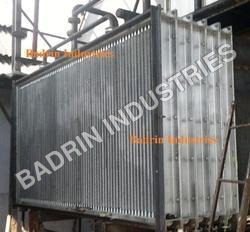
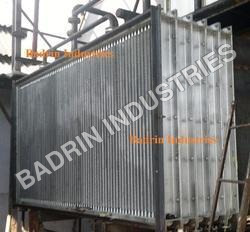
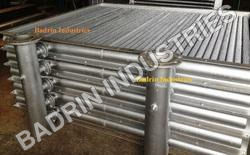
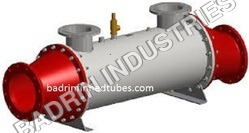
Under the meticulous control of our diligent technocrats, we are offering Marine Heat Exchangers for our esteemed clients. These exchangers are manufactured using premium quality components. Provided exchangers find their wide application in marine ships for transferring heat and cooling purposes. These exchangers are available by us in several specifications at rock bottom rates. अधिकover, our valued patrons can get these Marine Heat Exchangers from us in bulk.
Marine Heat Exchangers come in superior grade stainless steel 316L/titanium material finish which makes these deliver optimum working performance. Further, its compact size finish also makes these provide for superior usage. Some of its features include ensures high viscosity oil with good flow velocity inside unit; high heating efficiency for oil cooling; provides for easy installation support; maximum working pressure on oil side of 25 bar; maximum working pressure on water side of 3 bar, 10 bar, 15 bar.
Key Points of Marine Heat Exchangers:
- Smooth operation
- Trouble free functioning
- Require low maintenance
- High durability
Superior Corrosion ResistanceConstructed from copper, brass, or stainless steel, these marine heat exchangers exhibit exceptional resistance to corrosion, making them ideal for harsh maritime and industrial environments. This robust material selection extends operational life and minimizes downtime due to maintenance.
Efficient Heat TransferEach unit features a shell and tube design, maximizing heat transfer efficiency across a surface area of 0.6-2.4 m. With up to 60 tubes per exchanger, they effectively regulate temperature in marine engines, HVAC systems, and power generation applications.
Flexible Installation OptionsDesigned for versatile use, these heat exchangers support both horizontal and vertical mounting, ensuring convenient integration in confined marine engine rooms or industrial setups. Threaded and flanged end connections make installation and future servicing straightforward.
FAQs of Marine Heat Exchangers:
Q: How do marine heat exchangers enhance engine performance?
A: Marine heat exchangers regulate engine temperature by transferring excess heat away from machinery, helping maintain optimum operational conditions and prolonging engine life. Their high heat transfer efficiency reduces the risk of overheating during continuous operations.
Q: What materials are used in these marine heat exchangers, and why?
A: The exchangers are made from copper, brass, or stainless steel, selected for their exceptional resistance to corrosion and durability. These materials withstand harsh marine conditions and exposure to saltwater, offering long-term reliability.
Q: When should these heat exchangers be serviced or cleaned?
A: Thanks to their easy-to-clean design, routine inspection and cleaning are recommended during scheduled vessel or plant maintenance. Their low-maintenance structure helps prevent scale buildup and ensures consistent performance.
Q: Where can these heat exchangers be installed?
A: Suitable for marine engines, HVAC systems, and power generation units, these exchangers can be installed horizontally or vertically. Their compact design and threaded/flanged connections allow flexible positioning in various onboard or industrial environments.
Q: What is the process of installing the heat exchanger in a marine engine room?
A: Installation involves securing the unit in either horizontal or vertical orientation, connecting threaded or flanged ends to existing piping, and ensuring proper alignment for optimal fluid flow. The process is straightforward due to the modular structure and standard connection sizes.
Q: What are the benefits of using this heat exchanger in a power generation application?
A: In power generation, these heat exchangers provide high thermal efficiency and robust corrosion resistance, resulting in improved operational stability, reduced maintenance costs, and enhanced equipment longevity.
Q: How does the heat exchanger support varying flow rates and operating pressures?
A: The design accommodates liquid flow rates from 1.2 to 5.8 m/h and working pressures up to 2.5 MPa, making it suitable for handling diverse cooling requirements across marine, industrial, and HVAC applications.