 Call Us : 08045803783


 Send Inquiry
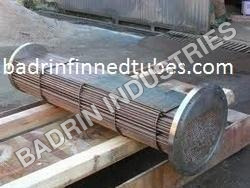
Industrial Heat Exchanger
Price 10000 INR/ Piece
MOQ : 5 Pieces
Industrial Heat Exchanger Specification
- Number of Pipe
- 40
- Max. Capacity
- 50000 kcal/hr
- Thickness
- 6 mm
- Temperature
- up to 180C
- Diameter
- 400 mm
- Max Pressure
- 12 bar
- Condition
- New
- Structure
- Shell and Tube
- Liquid Flow Rate
- 5 m/h
- Working Presssure
- 10 bar
- Voltage
- 220-380 V
- Power
- 1.5 kW
- Weight
- 250 kg
- Dimensions
- 1200 x 600 x 800 mm
- Corrosion Resistance
- High
- Heat Exchange Area
- 15 m²
- Installation
- Horizontal
- Connection Type
- Flanged
- Design Pressure
- 16 bar
- Application
- Industrial Process Heating and Cooling
- Material
- Stainless Steel
- Maintenance
- Low
Industrial Heat Exchanger Trade Information
- Minimum Order Quantity
- 5 Pieces
- Supply Ability
- 1 Piece Per Day
- Delivery Time
- 3-4 Days
- Main Domestic Market
- All India
About Industrial Heat Exchanger
We are the leading Manufacturer,supplier and Exporters of Industrial Heat Exchangers,Chennai,India. That is used for reaction purposes after heating up procedure. Reaction processes are carried out in different heat exchanger types, of which the most commonly used in the multi tube heat exchanger with static mixing elements inside the pipes. Contrary to empty tube heat exchangers, these multi tube heat exchangers considerably extend the operating time between services when using static mixing elements.The continuous mixing of these exchangers during the heating stage improvises the reaction and reduces the processing time. Following are the beneficial features of these industrial heat exchangers:
- Longer operating times between services
- Reduced footprint due to compact system
- High heat transfer capacities
- Better process control
Efficient Heat Transfer for Industrial Needs
The shell and tube design maximizes the heat exchange process, ensuring optimal energy transfer in process heating and cooling tasks. Stainless steel construction provides exceptional corrosion resistance, making the unit reliable for long-term industrial use, particularly where harsh chemicals or high temperatures prevail.
Designed for Easy Installation and Maintenance
This heat exchanger is designed for horizontal installation and uses flanged connections for straightforward setup. With a maintained structure thickness of 6 mm and low-maintenance requirements, operators benefit from reduced downtime and simplified servicing, ensuring consistent performance in industrial operations.
FAQs of Industrial Heat Exchanger:
Q: How does the stainless steel construction benefit the heat exchanger in industrial processes?
A: Stainless steel offers superior corrosion resistance, making it highly durable in applications involving harsh chemicals or elevated temperatures. This ensures longevity and consistent performance in demanding industrial environments.Q: What is the typical installation process for this industrial heat exchanger?
A: The exchanger is designed for horizontal installation, utilizing flanged connections. This allows for quick and secure integration into existing piping systems. Its manageable dimensions and weight (250 kg) facilitate transportation and on-site setup.Q: When should this heat exchanger be used in an industrial setting?
A: This model is suitable for process heating and cooling where medium to high-capacity heat transfer is required, such as chemical, food, or manufacturing industries. It handles temperatures up to 180C and pressures up to 12 bar.Q: Where can this shell and tube heat exchanger be applied most effectively?
A: It is most effective in sectors performing industrial process heating or cooling, including chemical production plants, oil refineries, and large HVAC systems. Its high corrosion resistance makes it ideal for use with aggressive fluids.Q: What are the operational benefits of the 15 m heat exchange area and 5 m/h flow rate?
A: The generous heat exchange area and liquid flow rate enable efficient temperature control, leading to enhanced system productivity and stable thermal management in complex industrial processes.Q: How is routine maintenance managed for this heat exchanger?
A: The units shell and tube structure and high-grade materials minimize wear and scale buildup. Regular inspections and periodic cleaning are typically sufficient to maintain performance, thanks to its low-maintenance design.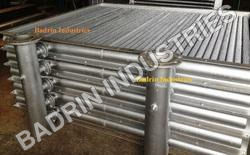
Tell us about your requirement

Price:
Quantity
Select Unit
- 50
- 100
- 200
- 250
- 500
- 1000+
Additional detail
Mobile number
Email

More Products in Heat Exchangers Category
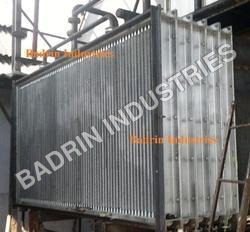
Rice Mill Heat Exchangers
Price 10000 INR / Piece
Minimum Order Quantity : 5 Pieces
Temperature : Other, Up to 150C
Weight : 1200 kg
Condition : New
Liquid Flow Rate : 6500 L/h
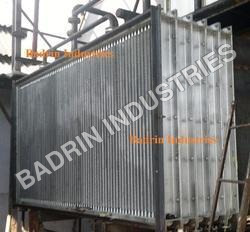
Heat Exchangers
Price 10000 INR / Piece
Minimum Order Quantity : 5 Pieces
Temperature : Other, 10C to 200C
Weight : Varies as per model and capacity
Condition : New
Liquid Flow Rate : Up to 7500 LPH
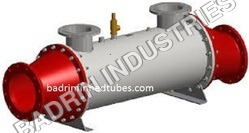
Oil Heat Exchangers
Price 10000 INR / Piece
Minimum Order Quantity : 5 Pieces
Temperature : Other, Up to 180C
Weight : 120 kg
Condition : New
Liquid Flow Rate : 150 L/min
High Pressure Heat Exchangers
Price 10000 INR / Piece
Minimum Order Quantity : 5 Pieces
Temperature : Other, Up to 250C
Weight : 800 kg
Condition : New
Liquid Flow Rate : 3000 LPH

Address
BADRIN INDUSTRIES
GST : 33AQYPM9120D1ZO
GST : 33AQYPM9120D1ZO
- No. 4, Yadava Street, SIDCO Industrial Estate, Ambattur,Chennai - 600098, Tamil Nadu, India
- Phone :08045803783
- Send Inquiry
 Send Inquiry
 Send Inquiry
 Send SMS
 |
BADRIN INDUSTRIES
All Rights Reserved.(Terms of Use) Developed and Managed by Infocom Network Private Limited. |
