 Call Us : 08045803783


 Send Inquiry
Sugar Mill Heat Exchanger
MOQ : 5 Pieces
Sugar Mill Heat Exchanger Specification
- Thickness
- 5mm12mm (shell and tubes, as per design)
- Max Pressure
- 10 bar
- Number of Pipe
- Up to 150 tubes
- Max. Capacity
- Up to 80,000 LPH (as per requirement)
- Temperature
- Up to 150C
- Diameter
- 200mm 1200mm (customized)
- Condition
- New
- Structure
- Shell and Tube
- Liquid Flow Rate
- 1,000 40,000 LPH (customizable)
- Working Presssure
- Up to 10 bar
- Power
- Not applicable (heat exchanger operates without direct power input)
- Weight
- Customizable as per design requirements
- Dimensions
- Custom-built as per sugar mill setup
- Design Pressure
- As per ASME/IS/BS standards
- Corrosion Resistance
- Yes, suitable for sugar mill processes
- Tube Diameter
- 19mm 38mm
- Maintenance
- Low, easy to clean and service
- Mounting
- Horizontal or Vertical as required
- Type
- Industrial Heat Exchanger
- Application Industry
- Sugar Industry
- Usage
- Juice heating, evaporation, clarification in sugar mills
- Material of Construction
- Stainless Steel 304/316, Carbon Steel
- Surface Finish
- Polished/Anti-corrosive paint
- Tube Length
- 1000mm 6000mm
- Heat Transfer Area
- 5 200 m (as per application)
Sugar Mill Heat Exchanger Trade Information
- Minimum Order Quantity
- 5 Pieces
- Supply Ability
- 1 Piece Per Day
- Delivery Time
- 3-4 Days
- Main Domestic Market
- All India
About Sugar Mill Heat Exchanger
Sugar Mill Heat Exchangers are made from high grade stainless steel material and coated with heat resistant paint to make the corrosion resistance & long lasting. The machines are designed in heavy-duty structures which help in increasing the production rate per time. These are used mainly in sugar industries to reduce or less the fouling smell and make the process quick & hygienic in quality. Sugar Mill Heat Exchangers are also used at distilleries, CIP system, kettle evaporator and food & beverage factories. These are simple to install & operate due to computerized panel boards. The machines are equipped with gasket plate heating system, multi-stream and electric motor. Available in different sizes and functions in seamless finishing.Superior Performance in Sugar Mill Processes
Designed specifically for the sugar industry, our heat exchanger ensures efficient transmission of thermal energy for juice heating, clarification, and evaporation. The shell-and-tube structure, combined with well-polished or anti-corrosive painted finishes, provides optimal resistance to the acidic conditions commonly encountered during sugar production. Mounting flexibility allows either horizontal or vertical installation depending on mill layout and space.
Customizable Design to Match Operational Demands
Dimensions, tube diameter, and shell thickness are tailored to fit your specific sugar mill requirements. From tube lengths between 1000mm and 6000mm, and diameters from 19mm to 38mm, the units are built to handle liquid flow rates up to 80,000 LPH. All materials and designs conform to international standards to ensure safe and consistent operation.
Low Maintenance and Easy Serviceability
With accessible structure and easy-to-clean surfaces, our heat exchanger reduces downtime in sugar mill operations. The robust construction guarantees longevity, while routine maintenance is minimal due to its corrosion-resistant properties and reliable build. The units modular design makes servicing simple and cost-effective, ensuring high productivity.
FAQs of Sugar Mill Heat Exchanger:
Q: How does this heat exchanger improve juice heating and evaporation in sugar mills?
A: The heat exchanger efficiently transfers thermal energy using its shell-and-tube design, optimizing juice heating and evaporation processes. Its large heat transfer area and sturdy construction allow consistent temperature control, resulting in better process efficiency and product quality.Q: What materials are used for the construction of the heat exchanger?
A: The heat exchanger is manufactured with Stainless Steel 304 or 316 and Carbon Steel, offering robust performance and excellent resistance to corrosion, which is essential for sugar mill environments that deal with acidic mixtures.Q: When is maintenance typically required for this heat exchanger?
A: Due to its low-maintenance design and corrosion-resistant materials, maintenance is infrequent and usually involves routine cleaning, inspection of tubes, and surface checks, which can be scheduled during regular sugar mill downtime.Q: Where is this heat exchanger typically installed within a sugar mill?
A: The unit can be mounted either horizontally or vertically, tailored to fit different sections like juice heating stations, clarification tanks, or evaporation units, depending on your facilitys specific process flow and space constraints.Q: What are the benefits of using a shell-and-tube heat exchanger in sugar mills?
A: Shell-and-tube design provides efficient heat transfer, easy scalability, high-pressure capability (up to 10 bar), and simple cleaning and maintenance, resulting in reduced operational costs and extended equipment lifespan.Q: How is the heat exchanger customized for different sugar mill setups?
A: Customization includes modification of tube length, diameter, shell thickness, overall dimensions, and number of tubes to meet specific process requirements. This ensures ideal compatibility and performance, whether for small or large-scale mills.Q: Is direct electric power required for the heat exchanger operation?
A: No, the heat exchanger operates passively, relying on the flow of heating medium and process liquid rather than direct electric power, making it energy-efficient and cost-effective for industrial operations.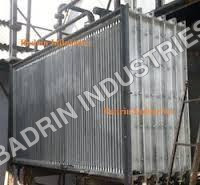
Tell us about your requirement

Price:
Quantity
Select Unit
- 50
- 100
- 200
- 250
- 500
- 1000+
Additional detail
Mobile number
Email

More Products in Heat Exchangers Category
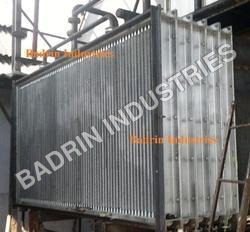
Rice Mill Heat Exchangers
Price 10000 INR / Piece
Minimum Order Quantity : 5 Pieces
Condition : New
Thickness : 8 mm
Liquid Flow Rate : 6500 L/h
Structure : tube Heat Exchanger
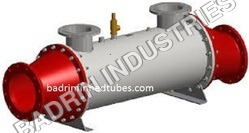
Oil Heat Exchangers
Price 10000 INR / Piece
Minimum Order Quantity : 5 Pieces
Condition : New
Thickness : 4 mm
Liquid Flow Rate : 150 L/min
Structure : Other, Tubular/ Shell & Tube
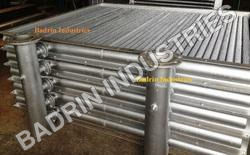
Industrial Heat Exchanger
Price 10000 INR / Piece
Minimum Order Quantity : 5 Pieces
Condition : New
Thickness : 6 mm
Liquid Flow Rate : 5 m/h
Structure : Other, Shell and Tube

Stainless Steel Heat Exchangers
Price 10000 INR / Piece
Minimum Order Quantity : 5 Pieces
Condition : New
Thickness : 25 mm
Liquid Flow Rate : 25006000 L/hr
Structure : Other, Shell and Tube

Address
BADRIN INDUSTRIES
GST : 33AQYPM9120D1ZO
GST : 33AQYPM9120D1ZO
- No. 4, Yadava Street, SIDCO Industrial Estate, Ambattur,Chennai - 600098, Tamil Nadu, India
- Phone :08045803783
- Send Inquiry
 Send Inquiry
 Send Inquiry
 Send SMS
 Call Me Free
 |
BADRIN INDUSTRIES
All Rights Reserved.(Terms of Use) Developed and Managed by Infocom Network Private Limited. |
